

Poor sleep usually has more than one cause, and muscle tension is probably the last one people name. Somebody lying awake at eleven will blame their workload, their coffee, or their phone long before they think about the fact that their upper back has been locked up since Tuesday. A body that just cannot get comfortable will keep interrupting the night, no matter how tired the person in it actually feels.
This is not a claim that massage treats a sleep disorder. It does not, and if you are dealing with a persistent sleep problem, that is a conversation for a doctor, not a spa.
What hands-on work can reasonably do is take the physical tension out of the equation, and booking time at a dependable massage spa gives the evening a real transition point, which for a lot of people is the piece that has quietly gone missing.
The Link Between Muscle Tension and Restless Nights
Tension builds up in predictable places. The neck and shoulders for anyone at a desk. The lower back for anyone driving or standing through a shift. The calves and hips are for anyone active, and honestly, most people carry a bit of all three without noticing.
During the day, these barely register, because movement and distraction cover them. Lying still in a dark room removes both, and what was a background sensation becomes the only thing there is to notice. That is why discomfort so often seems to arrive at bedtime rather than during the day.
It was there the whole time, just waiting for things to go quiet. Sustained work through those areas, the kind used in Swedish massage and built into most couples massage treatment sessions, addresses the physical side of it directly, and guests frequently mention that the night after a session was the first in a while where they did not spend twenty minutes trying to find a comfortable position.
Individual experiences vary, and nobody should expect a single massage to resolve months of poor sleep, but the mechanism is straightforward enough.
What an Evening Appointment Offers a Wind Down
Evening routines across Denver have quietly stopped functioning as routines. Maybe you’ve noticed it yourself: the gap between finishing work and going to bed gets filled with screens, which keep the mind active right up until the moment the light goes off. There is no longer much of a clear line between the active part of the day and the resting part.
An evening massage rebuilds that line. Your phone goes in a locker. The room is quiet and dimly lit, and for an hour there is nothing to read, nothing to respond to, and nothing to decide.
It even helps to think a little about what to eat before a couple’s massage, so you’re not walking in stuffed or running on empty. Then you drive home in the dark and go to bed, and as a sequence it resembles how evenings used to work before every hour had a screen in it. The value is as much in the structure as in the massage itself.
Pressure and Timing Both Affect the Rest of Your Night
Which treatment you choose matters here, and the difference between Swedish and deep tissue techniques explains why the intuitive answer is not always the right one. Firm deep tissue work is excellent for chronic tightness, but it can leave muscles feeling worked for a day or so afterward, which is not always what you want an hour before bed. It’s worth thinking through before you book.
| Treatment | Typical pressure | Often chosen for an evening session |
|---|---|---|
| Swedish | Light to medium, steady and rhythmic | The most common choice for winding down |
| Hot stone | Light to medium with sustained warmth | Guests who settle faster with heat |
| Deep tissue | Firm and targeted | Better earlier in the day, or when tightness is the main issue |
| Reflexology | Focused pressure on feet or hands | A shorter option late in the evening |
Swedish massage is where most guests booking specifically for rest end up, since the pace and pressure suit switching off rather than being worked on. Say what you are after when you book, even if it feels like a small thing to mention.
That’s part of how therapists customize couples massage sessions to begin with, and a therapist who knows you are aiming for a calm evening will approach things differently than one who thinks you want your shoulders taken apart.
Feeling wound up after a long week in the city? Give us a call at (303) 345-3700, and we’ll help you find an evening slot that actually fits your schedule.
Sharing a Wind Down Rather Than Doing It Alone
Sleep habits in a household tend to be joint rather than individual. One person still working at ten reliably keeps the other awake, and one person decompressing while the other scrolls does not exactly produce a calm bedroom either. It tends to average out to whoever is more restless, you know, not whoever is more tired.
Booking together sidesteps that, and it also means each of you can ask your therapist to tailor pressure and pacing to what your body specifically needs that evening. Both of you finish the evening in the same state, at the same time, having had the same hour without a screen.
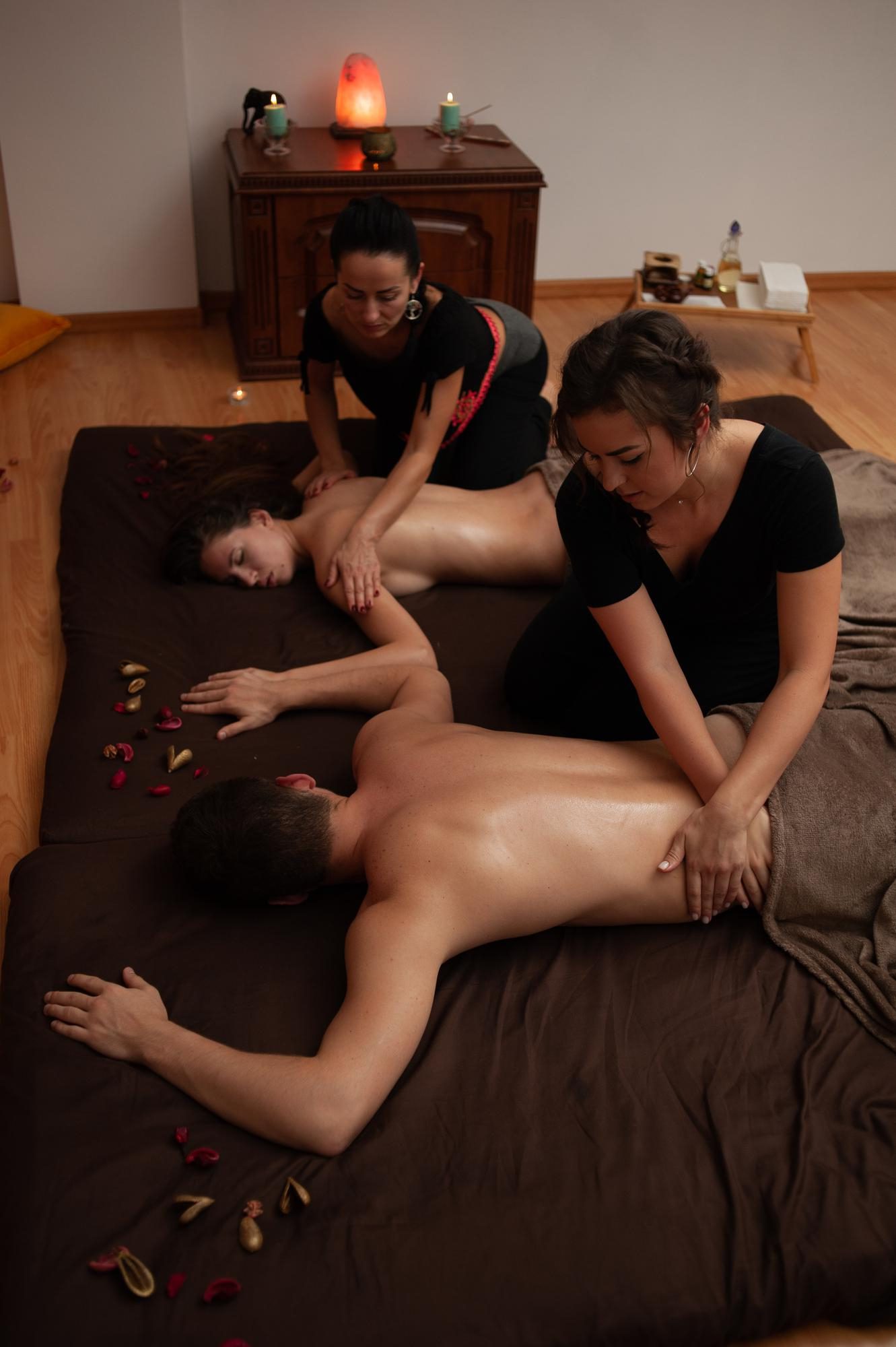
Because we treat couples side by side in the same private suite rather than in separate rooms, the whole thing stays shared from arrival to leaving. A few practical habits extend it further.
- Book late rather than early. The closer to bedtime, the less chance to undo it.
- Leave the phones alone afterward. The hour after the session is where the benefit is usually lost.
- Keep the lights low at home. Bright overhead lighting works against everything the session just did.
- Drink water, skip the alcohol. A nightcap disrupts sleep quality even when it speeds up falling asleep.
- Go to bed sooner than usual. Staying up to make the most of feeling relaxed kind of defeats the point entirely.
When Massage Is Not the Answer
Being straight about the limits matters here. Massage is not a treatment for insomnia, sleep apnea, or any other sleep disorder, and it is not a substitute for medical care. Persistent difficulty sleeping, waking repeatedly through the night, or exhaustion that does not improve with rest all warrant a conversation with a healthcare provider rather than a spa booking.
What we can offer at Zen’d Out is one hour that removes physical tension and gives the evening a clear stopping point. For plenty of guests, that is genuinely useful. For anyone whose sleep problem has a medical cause, it is a nice addition to proper treatment rather than a replacement for it, and we would rather just say that plainly.
Frequently Asked Questions
How soon after a massage will I notice a difference in my sleep?
Many guests describe sleeping more soundly the same night, though this varies considerably between individuals. If tension has built over months, one session is unlikely to resolve it entirely. Regular appointments tend to produce a more consistent effect than any single visit does.
Is an evening or morning appointment better for sleep?
Evening generally suits this goal better, since there is less opportunity afterward to undo the effect. A morning session still helps with muscle tension, which carries through to the night, but the wind-down benefit is strongest when the appointment sits closer to bedtime.
Which massage type is best if I mainly want to relax?
Swedish massage is the usual choice, using lighter gliding strokes at a steady pace. Hot stone suits guests who settle faster with warmth. Deep tissue is excellent for chronic tightness but can leave muscles feeling worked, so it often sits better earlier in the day.
Can massage help if my sleep problems are stress-related?
It can form part of a wider approach, since it addresses physical tension and provides a genuine break from screens and demands. It is not a treatment for anxiety or a sleep disorder, though. Anyone whose sleep is persistently disrupted should speak with a healthcare provider.
Have questions about which session fits you best, or just want to talk through your options first? Book an appointment with us, or reach us at (303) 345-3700 or info@zendoutmassage.com. We’re here Monday through Sunday, 9:00 am to 9:00 pm, at 1143 Auraria Parkway, Suite 204B, Denver, CO 80204.


