Targeted Sports Massage Therapy in Denver
Zen'd Out Massage Spa provides sports massage in Denver, CO, from our studio at 1490 Lafayette Street in the Cheesman Park neighborhood. Our licensed massage therapists focus on the muscles your sport loads hardest. Sessions run 60, 90, or 120 minutes, and walk-ins are welcome any day of the week.
Runners, cyclists, climbers, and skiers use sports massage to recover between hard efforts and loosen tight spots before an event.
Ready to recover? Book Online or Call (303) 345-3700

Where Mile High Training Leaves Muscles Tight
Every sport loads the body in its own pattern, and Denver athletes often stack several of them across the seasons. Your therapist focuses on the muscle groups, tendons, and fascia that carry the most strain.
Running and Race Training
Miles on the Cheesman Park loop, City Park, and Colfax Avenue tighten the calves, hamstrings, hip flexors, and the iliotibial band along the outer thigh. Tight calves also pull on the plantar fascia under the foot and the Achilles tendon above the heel, two common sources of pain for runners building toward race season.
Cycling and Mountain Biking
Hours in a fixed riding position tighten the hip flexors and load the quadriceps, glutes, and lower back. Technical trail riding adds grip fatigue in the forearms and tension across the neck and shoulders from holding the bars.
Climbing and Bouldering
Gym sessions and weekends on rock overload the finger flexors, forearms, lats, and rotator cuff. That repetitive pulling can show up as elbow pain on the inside or outside of the joint.
Skiing and Snowboarding
Long days on the mountain put sustained load on the quads, calves, and lower back, and snowboarders add tension through the hips and obliques. Sessions between ski weekends give those muscles focused work before the next trip up I-70.
Weekend Athletes With Desk Jobs
A week at a desk tightens the neck, upper trapezius, chest, and hip flexors. A Saturday ride, hike, or pickup game then asks those same muscles to perform, which can set you up for a strain.
Left alone, knots, trigger points, and fascial adhesions limit range of motion and change the way you move. Your body then compensates and shifts extra load onto joints and connective tissue, which can turn a minor ache into a nagging injury.
Sports Massage in Denver, CO and the Dry Mountain Air
Denver sits 5,280 feet above sea level in a semi-arid climate that averages a little less than 16 inches of precipitation a year. Dry air pulls moisture from your body faster than air at sea level, so fluid loss during a workout can outpace what you drink.
Dehydrated muscle feels stiffer and resists pressure. That is why Zen'd Out recommends drinking water well before your appointment and again afterward. Well-hydrated muscles are easier for your therapist to work.
Thinner air also makes hard efforts feel tougher, especially for visitors and newer residents who are still adjusting.
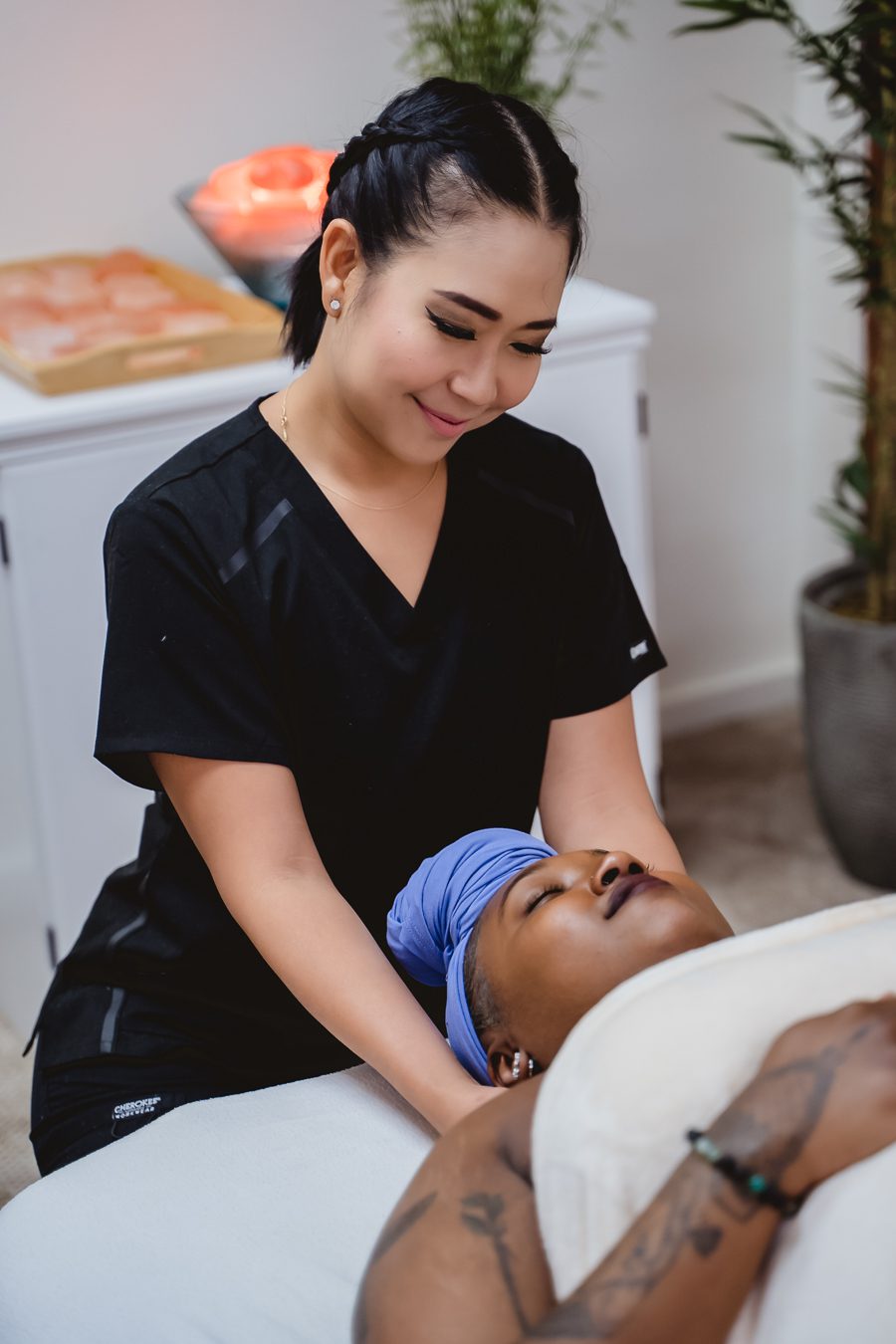
Benefits of Sports Massage Therapy
Research supports massage as a recovery tool. A 2018 meta-analysis in Frontiers in Physiology reviewed 99 studies on post-exercise recovery and concluded that massage appeared to be the most effective technique for reducing delayed onset muscle soreness and perceived fatigue.
Less Soreness After Hard Workouts
Delayed onset muscle soreness, or DOMS, usually peaks one to three days after a long run, a heavy lift, or a big ski day. A post-event massage can ease that soreness and help you feel ready for your next workout.
Better Flexibility and Range of Motion
Soft tissue work followed by assisted stretching can loosen shortened muscles and improve range of motion at the hips, shoulders, and ankles. Better mobility helps you move through a full stride, pedal stroke, or reach.
Early Attention to Overuse Problems
Your therapist works through tight bands and tender spots that often come with repetitive training, such as tension around the shins, calves, or forearms. Noticing those areas early gives you a chance to adjust your training or check in with a doctor before a small problem grows.
Mobility Around Old Injuries
Cross-fiber work around a healed strain targets stiff tissue so the area can move more freely with the muscle around it.
Rest and Relaxation After Training
Steady pressure can help you unwind after a week of hard workouts and long workdays, which makes it easier to rest before your next training block.
Book your recovery session. Book Online or Call (303) 345-3700
Techniques Used During Your Sports Massage
Sports massage shares its firm pressure with deep tissue massage in Denver, but your therapist organizes the session around your sport and training goals rather than general tension. Depending on your needs, the session may include these techniques.
- Compression. Rhythmic pressure into the muscle belly warms and softens tissue before deeper work.
- Trigger point therapy. Sustained pressure releases small, tight knots that restrict movement and send pain to nearby areas.
- Cross-fiber friction. Strokes across the grain of the muscle loosen adhesions near an old strain.
- Myofascial release. Slow, sustained pressure stretches the fascia that wraps each muscle and frees areas that feel stuck.
- Deep Swedish strokes. Your therapist applies effleurage, petrissage, and tapotement to the muscle groups your sport relies on.
- Assisted stretching and resisted movement. Your therapist moves each limb through its range and may ask you to push gently against resistance to restore flexibility.
- Lymphatic strokes. Light, directional strokes may help move fluid after a hard race or a long day outside.
Sessions vary with your needs. One client may want a full hour of focused work on a sore calf, while another spends half the appointment in assisted stretches.
Types of Sports Massage and When to Book
Sports massage sessions generally fall into four types, and the right one depends on where you are in your training. Your therapist adjusts pressure, pace, and stretching to match.
| Session type | When to book | Focus and pressure |
|---|---|---|
| Pre-event | Several days before a race or competition | Lighter, faster strokes that loosen tight spots without leaving legs heavy |
| Post-event | A few days after the event | Light to moderate work that eases soreness and supports recovery |
| Maintenance | Every few weeks during a training block | Moderate to firm work on the muscles your sport loads most |
| Restorative | After a minor strain, once your doctor clears you | Gentle work around the area, adjusted to your comfort |
The Denver Colfax Marathon, for example, starts and finishes in City Park each May, and organizers expected more than 27,000 runners for its 20th race weekend in 2026. Runners training for it can plan pre-event and post-event sessions around race weekend.
What to Expect at Your Appointment
A typical visit has three parts.

Before Your Session
Arrive a few minutes early to settle in. Tell us about recent races, injuries, surgeries, or medical conditions so your therapist can adapt the treatment.
During Your Session
Your therapist asks about your sport, recent workouts, sore areas, and preferred pressure before the hands-on work begins. You undress to your comfort level and stay properly draped throughout. Speak up anytime the pressure feels too light or too strong.
After Your Session
Drink water, move gently with light stretching or an easy walk, and keep the rest of the day light. Mild soreness can follow deep work and usually fades within a day or two.
Session Lengths and Add-Ons
Choose a session length that matches how many areas you want treated and how much stretching you want built in.
- 60 minutes. Focused work on one or two problem areas, such as calves and hamstrings after a long run.
- 90 minutes. Full-body recovery work plus time for assisted stretching.
- 120 minutes. Extra time for problem areas and stretching after a race, a ski trip, or a heavy training block.
You can add cupping, aromatherapy, or Himalayan hot stone massage to your session. Training partners who want to visit together can book at our couples massage spa in Denver, and solo visitors can compare our single massage packages in Denver.
When to Check With a Doctor Before Booking
Sports massage supports recovery, but it does not replace medical care. See a physician or physical therapist before booking if you have any of these.
- A new injury with swelling, bruising, numbness, or pain that worsens with movement
- A suspected muscle tear, sprain, or fracture
- Recent surgery or a history of blood clots
- A fever, infection, or open wound in the area you want treated
Once your doctor clears you, your therapist can adjust the session around the healing area.
Why Active Clients Choose Our Denver Studio
Colorado requires every practicing massage therapist to hold a license from the state Office of Massage Therapy Licensure, which calls for at least 500 hours of approved training. Therapist bios on our team page list training in sports massage, myofascial release, and injury recovery work.
Clients have given Zen'd Out Massage Spa in Denver 4.9 stars across 1,379 Google reviews. You can book online anytime or call during business hours.
Sports massage is one of several treatments we offer at this studio, alongside deep tissue massage, Swedish massage in Denver for lighter recovery days, and reflexology massage in Denver for feet that ache after long runs. Our massage gift cards also make it easy to treat the runner or skier in your life.
Schedule your session today. Book Online or Call (303) 345-3700
Sports Massage FAQs for Denver Athletes
Quick answers for runners, riders, and weekend athletes planning a visit.
Should I book a sports massage before or after the Colfax Marathon?
Both can help. Book a lighter session several days before race weekend so your legs feel loose, not heavy, at the start in City Park. A recovery session a few days after the race can ease lingering soreness. Tell your therapist your race date when you book so the pressure matches your timeline.
I am visiting Denver for a race or ski trip. Can I book a sports massage?
Yes. You can book online anytime or walk in during our daily hours. If you just arrived from a lower elevation, drink extra water before your appointment and tell your therapist about your travel and activity plans. That helps them choose the right pressure while your body adjusts to the altitude.
How is sports massage different from deep tissue massage?
Both use firm pressure on deeper muscle layers. Deep tissue massage targets chronic tension wherever it sits, while sports massage centers on the demands of your activity and adds assisted stretching, mobilization, and timing around events. You can alternate the two depending on where you are in your training cycle.
Do I need to be an athlete to get a sports massage?
No. Sports massage can help anyone who stays active, from marathoners to people who hike on weekends or garden for hours. It also suits desk workers with tight necks and hips who want focused work on specific problem areas rather than a general relaxation massage.
Does sports massage hurt?
Sports massage feels firm and focused, and tight spots can feel tender while your therapist works them. It should never feel sharp or unbearable. Tell your therapist when the pressure is too strong so they can adjust it.
How often should I get a sports massage?
It depends on your training load. During a heavy training block, a session every week or two can keep up with the workload. For general maintenance, once or twice a month works for many people. Your therapist can suggest a schedule that fits your sport and your calendar.
Can I walk in for a sports massage in Denver?
Yes. Our Lafayette Street studio welcomes walk-ins Monday through Sunday from 9 AM to 9 PM. Booking ahead online or by phone is the best way to secure your preferred time and a therapist with sports massage experience.
Visit Our Cheesman Park Studio
Our studio sits at 1490 Lafayette Street, Suite 203, near the intersection of Colfax Avenue and Downing Street. It is a short trip from the Cheesman Park running loop, the Denver Botanic Gardens, and City Park.
We welcome athletes from Cheesman Park, Capitol Hill, Uptown, City Park West, and Congress Park, along with clients from across the City and County of Denver.
Booking online takes as little as a minute. Tell us what you are training for so your therapist can plan your session.
Schedule your sports massage. Book Online or Call (303) 345-3700
Zen'd Out Massage Spa, Denver
1490 Lafayette Street, Suite 203, Denver, CO 80218
Open Monday through Sunday, 9 AM to 9 PM