How Can Couples Massage in Denver, CO Encourage Mindfulness Together?
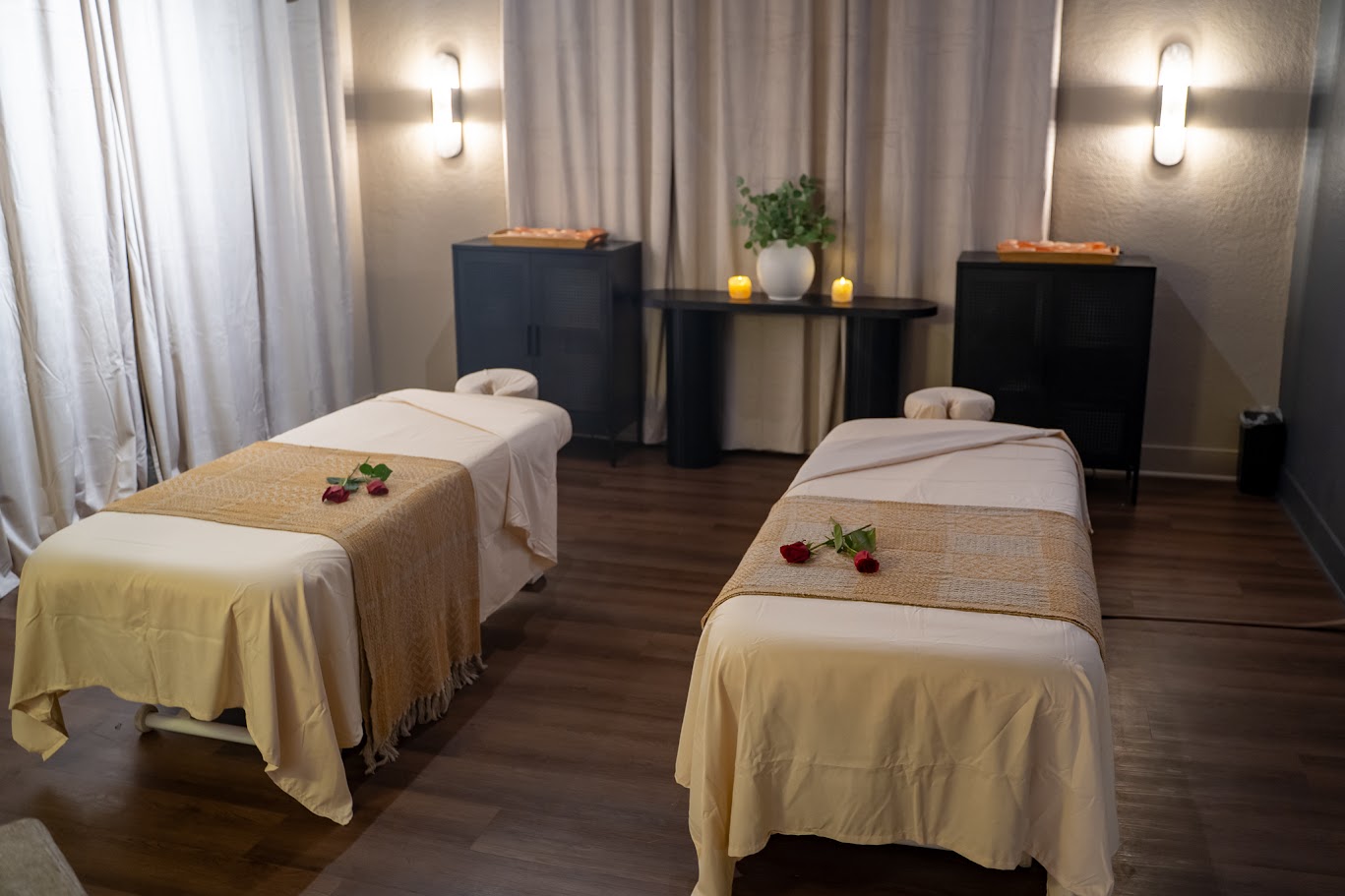
A massage gives attention somewhere obvious to go. That is the whole trick. Mindfulness usually fails for busy people because sitting still with no anchor invites the brain to run through the week instead, while an hour of hands-on work supplies a steady physical signal that is far easier to follow.
Our couples massage treatments for two create that anchor for both people at once, in a room with nothing else in it.
Mindfulness Without the Word Attached
Plenty of people end up doing something close to mindfulness on a massage table without ever setting out to. They booked a massage, and partway through noticed they had stopped composing emails in their head. That shift is the practice, whatever anyone chooses to call it.
The conditions do most of the work. Phones are away, the lighting is low, nobody needs anything from you for the next hour, and there is a continuous physical sensation to pay attention to.
Those four things are difficult to arrange deliberately at home and arrive automatically in a treatment room. If meditation apps have never quite stuck, this version tends to be easier, because the attention has somewhere concrete to rest rather than being asked to observe itself.
What to Notice Once You Are on the Table
The first few minutes are usually the noisiest. Thoughts keep arriving, the room feels unfamiliar, and there is a brief stretch where relaxing feels like a task. That settles on its own if you let it.
Once it does, there is plenty to notice. Where the tension actually sits, as opposed to where you assumed it was. Which side of your body is tighter. How your breathing changes when a therapist works through a tight area, and how it changes again once that area releases.
None of this requires effort. Following the work as it moves across your back is enough, and when your mind wanders off, which it will, returning to the sensation is the entire exercise. Our notes on relaxation techniques that pair well cover approaches that extend the effect beyond the appointment.
Breathing, Pressure and the Feedback Loop
Breath is the most useful tool in the room, and the one most people forget they have. Holding your breath during firmer work is a reflex, and it tightens the very muscle the therapist is trying to open. Exhaling slowly into pressure changes how that pressure lands, sometimes dramatically.
Our therapists check in through the session rather than assuming a comfort level at the start, so you have a running opportunity to notice and respond. Asking for less pressure, or more, is itself an act of paying attention to your own body, which is a skill plenty of adults have quietly lost.
Every treatment here is fully manual, with no devices, which means a therapist is reading tissue response continuously and adjusting as they go. You are both part of that loop rather than passengers in it.
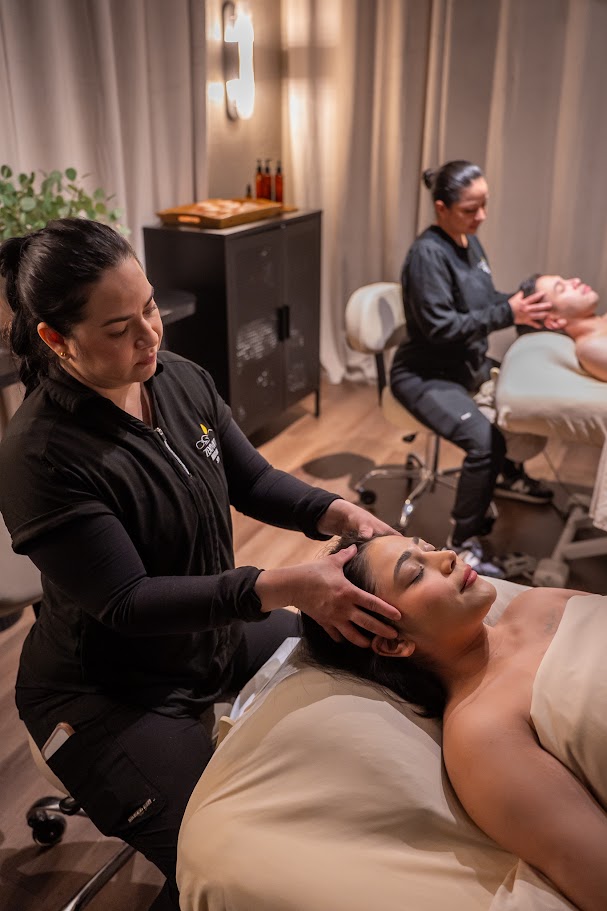
Book an hour with nothing else in it. Reserve a private suite for two online, or call and we will help you choose treatments that suit a slower pace.
Treatments That Suit a Slower Kind of Attention
Some styles lend themselves to this better than others, and the two of you do not need to match.
- Swedish massage, steady and flowing, easy to follow for a full hour
- Hot stone, where warmth gives the attention something simple to settle on
- Reflexology, focused enough to keep the mind from drifting far
- Prenatal massage, adapted positioning with an inherently slower pace
- Deep tissue, better suited to those who find firm pressure focusing rather than distracting
Say at booking which of those appeals, or describe how you want the hour to feel and let the therapist suggest something. Either works.
Session length matters more than most people expect here. Sixty minutes is enough to settle, though the attention usually arrives somewhere in the second half rather than the first. If the point of the visit is the slower kind of focus rather than working on a specific sore shoulder, a ninety-minute booking gives that far more room to happen.
Carrying the Practice Out of the Room
The hour ends, and the question becomes how much of it survives the drive across Denver. The honest answer is that it depends almost entirely on the first thirty minutes afterward. Reaching for a phone in the parking lot undoes a surprising amount.
What helps is choosing one thing to keep. Some couples keep the breathing, using a few slow exhales when a day starts to tighten.
Others keep a short stretch of quiet in the evening, with screens off, which is a smaller commitment than it sounds. Sleep often improves on the night of a massage, and that benefit is worth protecting too, something we explored in more depth around massage and better sleep quality.
Repetition is what turns a pleasant afternoon into a habit. Coming in regularly tends to make that settled state arrive faster, because the body recognizes the room and stops bracing on arrival.
Zen’d Out keeps both Denver area locations open seven days a week, which makes a regular rhythm easier to hold than a once-a-year treat. Massage supports general stress and tension rather than treating a medical condition, so anyone managing one should talk to their healthcare provider as well.
Give the two of you a quiet hour on the calendar. Booking online takes a couple of minutes, and our front desk is happy to help you plan the visit.
Related Topics:
Zen'd Out Massage & Wellness Spa
Come relax. Come celebrate. Come back to each other.
Private couples massage and spa experiences in Downtown Denver and Englewood.
Back to the blog